
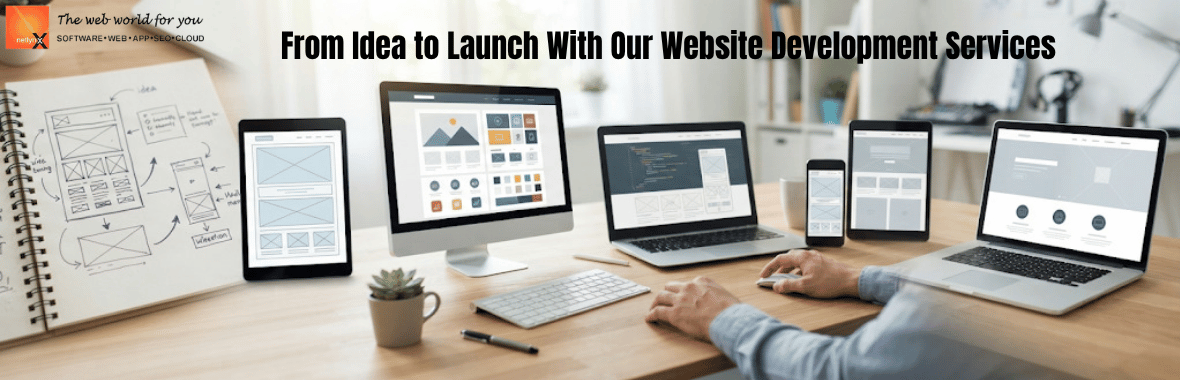
When designing a website, you don't begin by thinking about colors, images, and the design of the homepage. You begin by asking yourself one basic question: what is the actual purpose of our website in relation to the business?
While for one company it may lie in generating inquiries, another will need online booking, sales of goods, service description, or a simpler contact form. When the purpose becomes clear, it is easy to determine which features the site should have.
For any business located in Mumbai, it is also essential to consider how the website will be used in everyday situations. It may be visited when a person is traveling, found while searching on a smartphone, compared to several similar businesses, or checked for its address before contacting.
Start With a Clear Business Goal
Even before the design of the very first page, the business needs to know its own needs when creating the website.
This is about knowing the target audience, the products or services that need to be highlighted, and the actions that should be possible on arrival at the website. A local clinic could want people to make appointment requests, while a restaurant could need some way to show their menu and get reservations from potential customers. The business that provides various services would probably have to have proper service pages and inquiry forms too.
Such considerations could also help to avoid having many unnecessary features on the website, as anything that does not address a real need of the business could be redundant.
For the business cooperating with the website development company in Mumbai, the definition of the goals beforehand could simplify the whole process considerably.
Turn the Idea Into a Practical Website Structure
After the purpose of the site is determined, the next stage consists of finding out how the information is to be structured.
A website is not limited to Home, About, and Contact pages. Special pages can be dedicated to services offered by the company, and some products can also have dedicated pages. There can also be a place on the website for geographical information, frequently asked questions, testimonials, case studies, or booking.
The structure of the website should be clear and easily understandable for those who are using the website for the first time. Visitors shouldn't have to browse through numerous unrelated pages in order to find what they are looking for. This is also the stage when navigation, page order, URL, and inter-page links are planned out.
Prepare the Content and Features Before Development
With the basic framework set, it is now time to consider the requirements of the website itself.
These could include the actual copy text, images, product descriptions, service descriptions, contact details, enquiry forms, bookings, payments, mapping tools, and any other tools that the business may require. It is always better to plan these out before designing pages rather than forcing them in later on.
A Website Design Company in Mumbai might also consider discussing the services that the business offers, the types of questions that customers might have, the means of communication preferred by the business, and what all the website must do daily.
The final consideration can be the dynamic elements of the business. These include prices, promotions, company personnel changes, operational times, blog articles, and product updates. The website must facilitate all of these regularly.
Shape the Visual Design Around the Business
Once the structure and content are sorted out, the next stage of building a website is about making design decisions.
Design always begins with the look and feel of the site, which may include the colors used, the font style, images, and how the brand identity is incorporated into the website. From there, all the pages are created in order to help visitors find the required information quickly and understand what services the company provides and what actions they are supposed to take. Each element, such as buttons, images, headings, menus, and others, is placed logically rather than only for visual purposes.
Another important aspect to consider is the adaptability of the design on different types of displays. It means that the user can open the website not only from a laptop but also from his/her mobile phone when traveling or a tablet PC at home. The website should fit any screen size without making the content complicated to read. Website Design Company Mumbai will create an effective design for each page based on the previously chosen structure and content.
Develop the Website Behind the Design
When the design gets approved, it becomes time to convert these designs into a fully functional website.
This is the point where the developer starts building the pages, adding any necessary functionality, integrating any necessary forms and plugins, and setting up the content management system if necessary. What should be done at this point entirely depends on what kind of website is being built. If it is a small service-based website, then the design can be rather simple, while the website that sells something or makes bookings requires some additional features and functionality.
As these features get added, the performance of the website becomes crucial. Too large images, too many plugins, additional scripts, or poorly coded pages can make the experience on the website extremely slow and unpleasant. Thus, a web design company in Mumbai should find the balance between the look and functionality of the website and its performance.
At this point in the web development process, all ideas and page designs become a fully functional website that users can visit.
Test Every Important Part Before Launch
The website should not be released just because the pages are complete.
During testing before the release, the team tests the forms, buttons, menus, links, images, mobile design, browsers, and page loading. Also, content testing is done to see that nothing is missing and the content has no spelling errors, formatting problems, or out-of-date data.
This stage is very important for SEO at the local level. Titles, descriptions, headings, URL’s, internal linking, alternative text for images, and indexing can be tested. In the case of a company operating in Mumbai, the location pages need to say where the company is based and what it provides. So, a clinic would have its address in Mumbai and surrounding landmarks. A restaurant would tell about its location and how to make reservations there.
These details will let search engines better understand the company and will help local people decide if it is suitable for their needs. That is why web design services in Mumbai can involve so many things besides appearance.
Launch With a Plan for What Comes Next
The last stage is launching the website to make it accessible to everyone.
Before this stage, the team ensures that all the tools necessary to use such features as the domain, hosting, security certificate, analytics, forms, backup, and others work well. During the period following the website launching, there can appear some minor bugs that have not been discovered during the development process.
After the website has been launched, it needs regular monitoring instead of leaving it as it is. It is possible to track page loading, forms, broken links, traffic, search statistics, and other technical issues. It would be good to find out which pages are visited more often and what pages people leave.
Customer questions will show the pages with unclear information, while changes in the business can lead to the necessity of offering additional services or updating the content. Updates to software, regular backups, and checks of security and content are needed. A website should develop together with the business.
Conclusion
Creating a website for a Mumbai company requires not only creating a few good looking pages but a much more profound work including gaining insights into the business itself, its clients and goals. Then, everything, including the website architecture, its content, layout, development, SEO, testing, and launch, will contribute to the result.
But the real benefit of having such a website comes in how convenient and efficient it is for the users of this website. This means that the visitors have to be able to obtain the necessary information, to understand what a business offers, and to take certain actions. But on the other hand, this website has to be easy for the owner to manage.
Then, after launching this website the process of continuous monitoring and improving will make this website even more efficient. A properly developed website is not something that is done once and forever. It has to evolve.